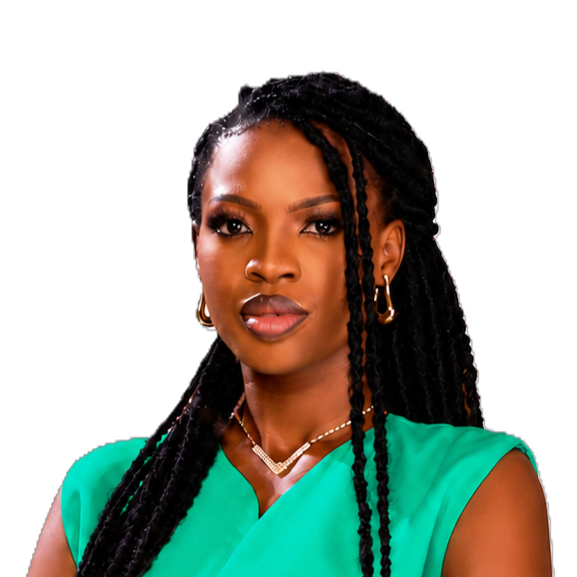
I Don't Build Technology
for Technology's Sake.
I Build It for the Gap.
My name is Dominion Akinrotimi. I am a data scientist, AI researcher, software developer, and educator. In March 2026, I graduated as the Overall Best Female Graduating Student at Olusegun Agagu University of Science and Technology, with a First Class in Computer Science and a CGPA of 4.89 out of 5.00. I built projects, won scholarships, led a tech community of 150+ members, reached 600+ students through outreach, and started two companies - all as an undergraduate. Not because my conditions were perfect. Because I refused to wait for them to be.
There's a distance between what a policy promises and what a young person in Africa actually lives. I know that distance personally. It shaped how I think, what I study, and why I chose to build things instead of waiting for things to be built for me.
I'm not here to impress you with a list of tools I know. You'll find that on my Projects page. I'm here to tell you why I pick up those tools in the first place.
I grew up watching systems fail the people they were supposed to serve. Students falling through cracks. Data existing but never being read. Talent everywhere, opportunity nowhere. And I kept asking the same question: If someone who understands both the problem and the technology showed up, what would they build?
The people closest to the problem should be the ones building the solution. I intend to be one of those people for as long as I can.
So when you see me building an AI model for breast cancer detection, or leading a community of 150+ young technologists, or standing on a stage talking about the mindset of problem-solvers, know that it all traces back to the same thread: I believe the people closest to the problem should be the ones building the solution. And I intend to be one of those people for as long as I can.
I’m Dominion Akinrotimi. Most people call me ADO and I am just getting started.